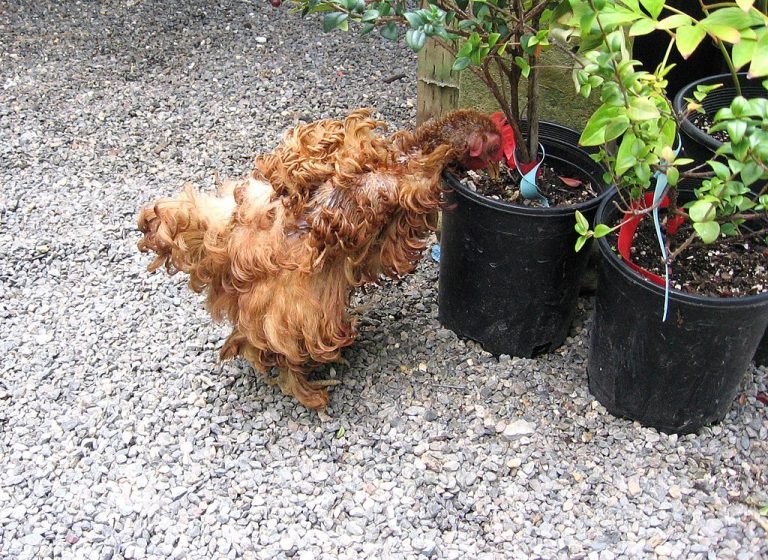
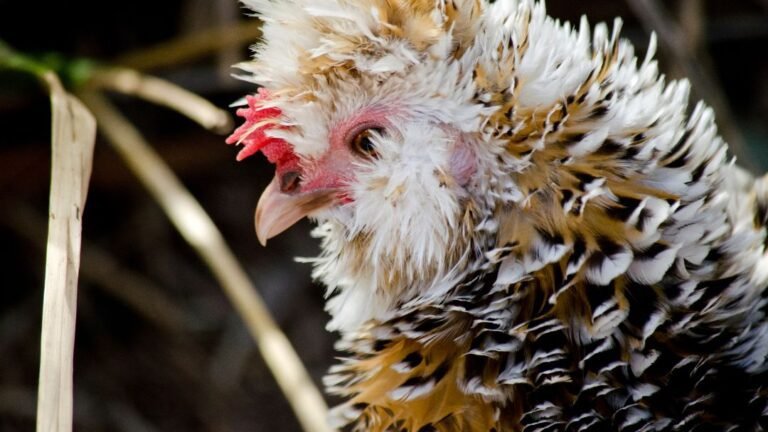
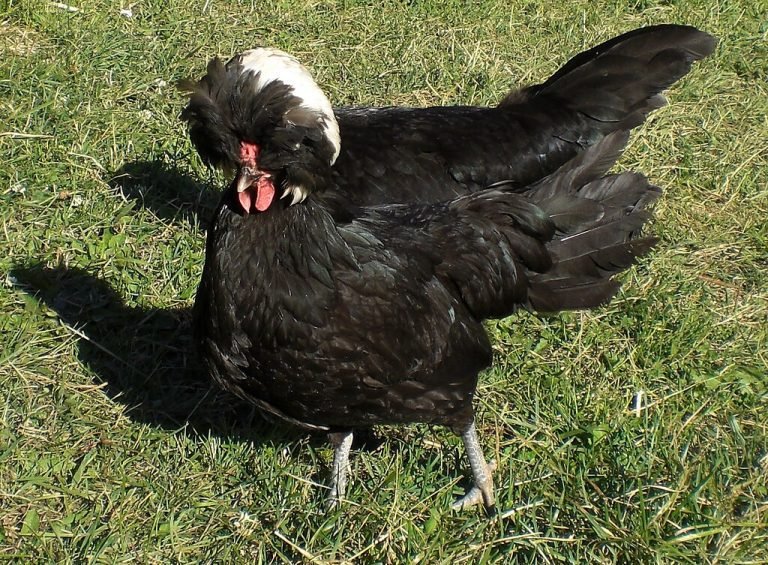
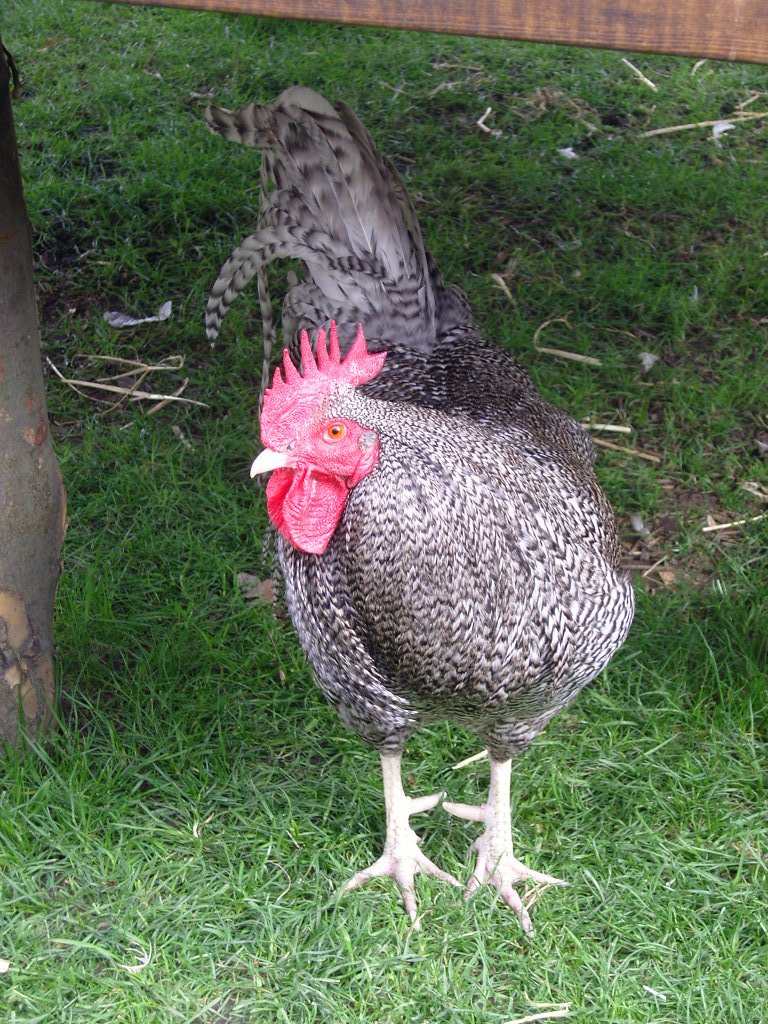
Dual-purpose chicken breeds are kept for both eggs and meat: the hens lay well, and the extra roosters grow big enough to be worth raising for the table. Many classic backyard breeds are dual-purpose, including the Plymouth Rock, Rhode Island Red, Wyandotte, Orpington and Sussex. This guide compares 18 of them using figures from The Livestock Conservancy, so you can choose by egg numbers, size, climate and temperament.
Key Takeaways
- Dual-purpose hens typically weigh about 6 to 8 lb, compared with about 4.5 lb for light egg breeds such as the Leghorn and Ancona.
- The best layers in this list are the Australorp (about 250 eggs a year), Dominique (230-275) and heritage Rhode Island Red (200-300).
- The biggest are the Jersey Giant (hens about 10 lb, roosters 13 lb) and Brahma (10 lb and 12 lb).
- For cold winters, look at the Brahma, Chantecler, Plymouth Rock, Jersey Giant and Wyandotte. For hot summers, avoid the Brahma and Chantecler.
- Heritage strains and hatchery strains of the same breed can differ in size, laying and broodiness.
What Makes a Breed Dual-Purpose?
The Livestock Conservancy lists a purpose for every heritage breed. Breeds marked for both eggs and meat are the dual-purpose breeds, and they sit between the light laying breeds and the heavy meat breeds:
- Size: hens of most dual-purpose breeds weigh about 6 to 8 lb and roosters 8 to 10 lb. Leghorn and Ancona hens, both light egg breeds, weigh about 4.5 lb.
- Eggs: most lay roughly 150 to 250 eggs a year. That is fewer than the best light layers, but plenty for a family.
- Temperament: most are described as calm or docile, and several are known as good winter layers.
- Broodiness: many dual-purpose hens will sit on eggs and raise chicks, which suits a flock that replaces itself.
If eggs are your only goal, see our best egg-laying breeds. For every breed in one table, see the chicken breed chart.
Dual-Purpose Breeds Compared
Weights are hen / rooster in pounds. Where The Livestock Conservancy gives no egg number, the table uses its own wording.
| Breed | Weight (lb) hen / rooster | Eggs per year | Egg color | Climate | Temperament | Goes broody |
|---|---|---|---|---|---|---|
| Australorp | 6.5 / 8.5 | Excellent; about 250 | Brown | Cold and heat | Active, yet gentle | Yes |
| Rhode Island Red (heritage) | over 6 / over 8 | 200-300 | Brown | Hardy in marginal conditions | Calm | Most strains* |
| Dominique | 5 / 7 | Excellent; 230-275 | Brown | Any climate | Active | Varies |
| Plymouth Rock | 7.5 / 9.5 | About 200 | Brown | Excellent in cold | Calm, docile | Yes |
| Sussex | 7 / 9 | Very good; about 200 | Tan to brown | Hot and cold | Docile, curious | Yes |
| Brahma | 10 / 12 | Up to 200; good winter layer | Brown | Excellent in cold; poor in heat | Calm, docile | Yes |
| Faverolles | 6.5 / 8 | Very good; 180-200 | Tinted to light brown | Any climate | Docile but active | Varies |
| Jersey Giant | 10 / 13 | Very good; 175-185 | Brown | Better in cooler climates | Docile | Yes (can break eggs) |
| Delaware | 6.5 / 8.5 | Very good; 150-200 | Brown | Hot and cold | Docile | Yes |
| Java | 7.5 / 9.5 | Good; 150+ | Brown | Hot and cold | Docile but active | Yes |
| Dorking | 7 / 9 | Good; about 150 | White | Any climate | Docile but active | Yes |
| Wyandotte | 6.5 / 8.5 | Good | Brown | Cold-hardy | Calm, friendly | Yes |
| Orpington | 8 / 10 | First-rate layers | Brown | Not stated | Calm, friendly | Not stated |
| Buckeye | 6.5 / 9 | Good; 120-150 | Brown | Cold; adapts to heat over time | Active, yet gentle | Varies |
| Chantecler | 6.5 / 8.5 | Good; 120-180; good winter layer | Brown | Best in cold; not for hot regions | Docile (some lines vary) | Varies |
| New Hampshire | 6.5 / 8.5 | Fair | Brown | Hot and cold | Docile | Varies |
| Rhode Island White | 6.5 / 8.5 | Good | Brown | Hot and cold | Docile | No |
| Holland | 6.5 / 8.5 | Good | White | Hot and cold | Docile | Yes |
*Rhode Island Red hens usually go broody, except in strains selected heavily for egg production. The Rhode Island Red figures are for the heritage (non-industrial) type.
Best Dual-Purpose Breeds by What You Need
Most eggs
The Australorp (about 250 eggs a year), Dominique (230-275) and heritage Rhode Island Red (200-300) lay the most. The Plymouth Rock and Sussex each lay about 200.
Most meat
The Jersey Giant is the largest, at about 10 lb for hens and 13 lb for roosters; it was originally meant to take the place of the turkey on the table. The Brahma (10 and 12 lb) and Orpington (8 and 10 lb) are also heavy. The Livestock Conservancy notes the Dorking for the flavor of its meat and calls the Buckeye an excellent broiler.
Cold winters
The Brahma is described as the chicken least susceptible to cold, thanks to its pea comb and tight feathering. The Chantecler is best in cold climates and has almost no wattles and a tiny comb. The Plymouth Rock, Wyandotte and Jersey Giant are also cold-hardy.
Hot summers
The Australorp, Delaware, Java, Sussex, New Hampshire, Rhode Island White and Holland are listed as doing well in both hot and cold climates, and the Dominique, Dorking and Faverolles in any climate. The Brahma does not tolerate heat well, and the Chantecler is not recommended for hot regions.
Raising your own chicks
For hens that will sit on eggs, the Brahma, Delaware, Dorking, Java, Sussex, Plymouth Rock and Holland are listed as setters, and the Buckeye is described as an exceedingly protective mother. The Jersey Giant goes broody but can be an awkward sitter that breaks eggs. The Rhode Island White is a non-setter.
Heritage vs Hatchery Strains
The same breed name can cover quite different birds. The Livestock Conservancy’s figures describe heritage birds bred to the breed standard. Strains selected mainly for egg laying can differ: for example, it notes that Rhode Island Red hens usually go broody, except in strains selected heavily for egg production.
If size or broodiness matters to you, ask the breeder or hatchery about their strain rather than relying on the breed name alone.
Conservation Status
Several dual-purpose breeds are still on The Livestock Conservancy’s Conservation Priority List. Its 2026 chart lists the Holland as critical and the Faverolles as threatened. It lists the Buckeye, Chantecler, Dominique, Dorking, Java and New Hampshire as “watch”, and the Australorp, Delaware, Jersey Giant and Sussex as recovering. The Plymouth Rock, Rhode Island Red and Brahma graduated from the list in 2023, and the Wyandotte and Orpington in 2016.
Keeping and breeding a rarer heritage breed helps it survive.
Before You Buy
- Bigger birds need more room. Use our coop size calculator to size the coop and run for your flock.
- Heavier breeds eat more. The feed calculator estimates how much feed your flock will need.
- Large single combs can be prone to frostbite. The Livestock Conservancy notes this for the Dorking, Faverolles, Java, New Hampshire, Sussex and Holland.
- Very large breeds can be hard for small children to handle. The Livestock Conservancy notes that the Brahma’s size may intimidate them.
FAQs
What is the best dual-purpose chicken breed?
It depends on what you want most. For eggs, the Australorp and Dominique lay the most in this list. For size, the Jersey Giant and Brahma are the largest. The Plymouth Rock, Sussex and Wyandotte are good all-rounders: good layers, calm and cold-hardy.
How many eggs does a dual-purpose chicken lay?
Most of the breeds here lay about 150 to 250 eggs a year. The Australorp lays about 250, and heritage Rhode Island Reds can lay 200 to 300.
Are dual-purpose chickens good for beginners?
Generally, yes. The Livestock Conservancy rates most of the breeds in this list as suitable for novice owners, and most are described as calm or docile.
Is the Rhode Island Red a dual-purpose breed?
Yes. The Livestock Conservancy lists the non-industrial Rhode Island Red for eggs and meat. Hens weigh over 6 lb and can lay 200 to 300 eggs a year.
Which dual-purpose chickens do best in the cold?
The Brahma, Chantecler, Plymouth Rock, Jersey Giant and Wyandotte are all noted for cold hardiness.
Conclusion
A dual-purpose breed gives you a steady supply of eggs and birds worth raising for meat. Choose by what matters most to you: laying (Australorp, Dominique, Rhode Island Red), size (Jersey Giant, Brahma), your climate, and whether you want hens that will raise chicks. Then check the strain before you buy.
Sources
- The Livestock Conservancy: Heritage Chicken Breed Comparison Chart (2026)
- The Livestock Conservancy: Plymouth Rock Chicken
- The Livestock Conservancy: Rhode Island Red (Non-Industrial) Chicken
- The Livestock Conservancy: Wyandotte Chicken
- The Livestock Conservancy: Orpington Chicken
- The Livestock Conservancy: Brahma Chicken
Checked September 2026. Labels change, so always read the label on the product you buy. See our editorial policy for how we research health articles.