A chicken’s comb is the fleshy red crest on its head; it is used mainly for display and to shed heat, and its type (single, rose, pea, walnut, V-shaped, buttercup and a few others) is set by the bird’s genes and breed. Comb shape affects how well a bird handles cold, and a comb’s size and color can tell you whether a hen is laying or unwell. This guide covers the main comb types, which breeds have them, and how to protect combs.
Key Takeaways
- Comb type is inherited, controlled mainly by the rose (R) and pea (P) genes.
- Large combs help chickens lose heat; small combs cope better with cold.
- A laying hen usually has a large, bright red comb; a non-laying hen’s is small and dull.
- Frostbite is most common in large single combs; do not rub or heat frostbitten tissue.
- Purple discoloration or swelling of the comb can be a sign of avian influenza and must be reported.
Correction: an earlier version of this article paired several breeds with the wrong comb types, said combs help retain heat in cold weather, claimed rose combs can obstruct breathing, and advised heating coops, warming frostbitten combs and giving antibiotics at home; these errors have been corrected.
What the comb does
The comb is the fleshy, red outgrowth on top of a chicken’s head. It serves mainly for display and also helps with cooling in hot weather. The comb is rich in blood vessels and acts like a radiator: the larger the comb, the better it dissipates heat in a warm climate, while small combs are an advantage in cold climates.
Combs also carry social and sexual signals. In red jungle fowl, the wild ancestor of chickens, females prefer males with longer, redder combs.
The main comb types
| Comb type | What it looks like | Example breeds |
|---|---|---|
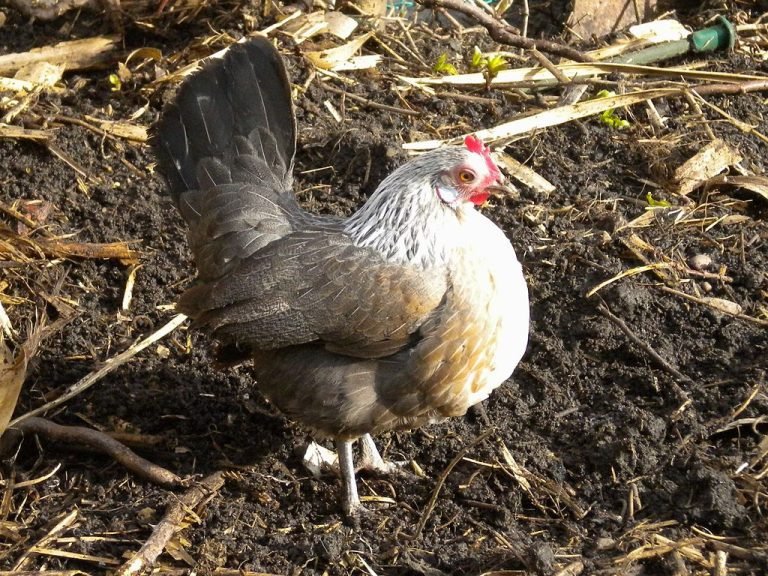
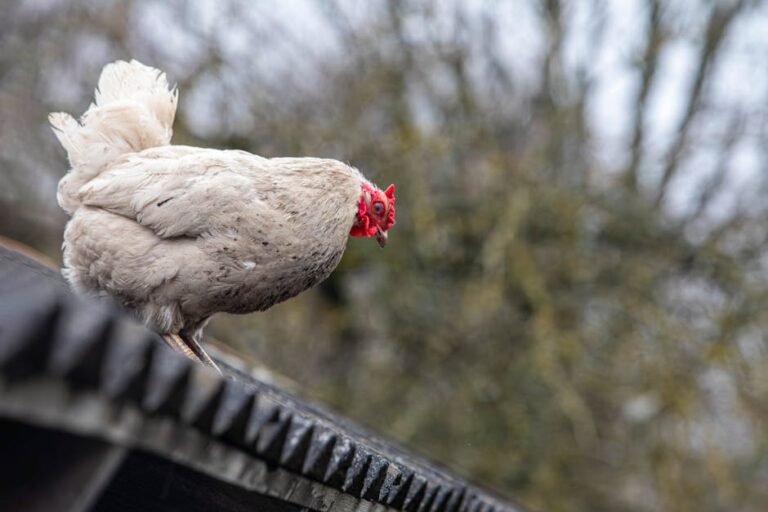
| Single | A moderately thin, upright blade with points along the top | The most common type; Leghorns and Rhode Island Reds have single-comb varieties |
| Rose | Solid, broad, nearly flat on top and low, ending in a tapering spike | Hamburgs, Rose Comb Leghorns, Wyandottes; Rhode Island Reds also come in a rose-comb variety |
| Pea | Medium length and low, with three low lengthwise ridges, the center one slightly higher | Brahmas, Buckeyes, Cornish, Cubalayas, Sumatras |
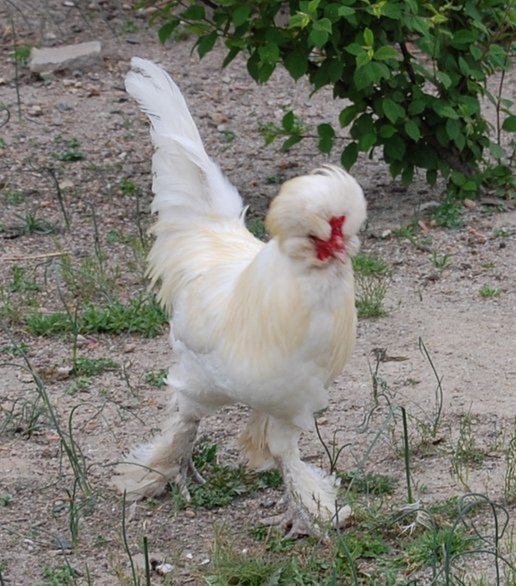
| Walnut (Silkie) | Almost round and somewhat lumpy | Silkies |
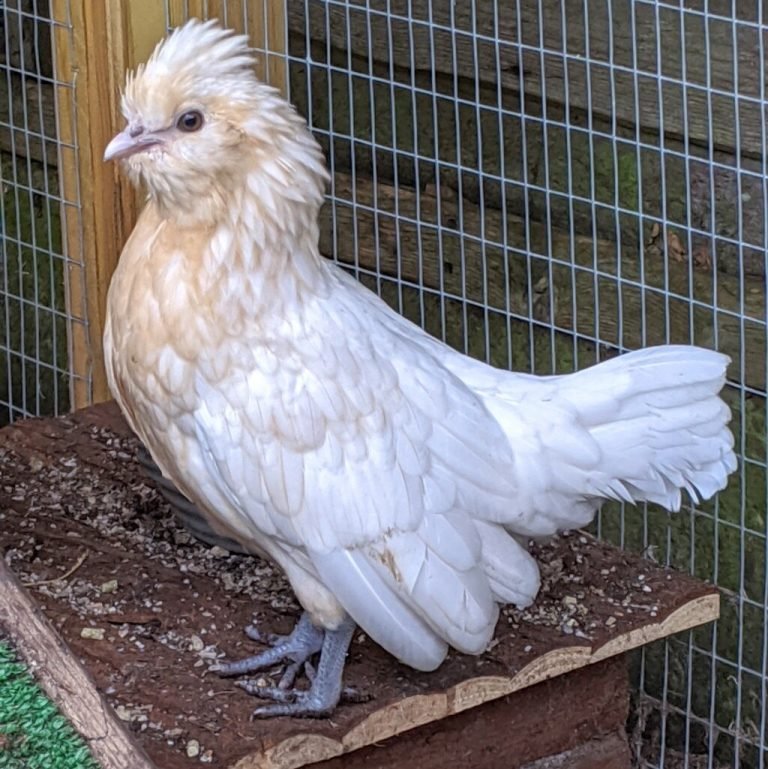
| V-shaped | Two well-defined horn-like sections | Houdans, Polish, Crevecoeurs, La Fleche, Sultans |
| Buttercup | A single leader from the base of the beak to a cup-shaped crown | Sicilian Buttercup (rare) |
| Cushion | Solid, low, moderately small and smooth on top | Few breeds |
| Strawberry | A low comb set well forward on the head | Few breeds |
Breed profiles on this site cover several of these birds, including the Brahma (pea comb), the Wyandotte (rose comb) and the Polish (V-shaped comb).
How comb type is inherited
Comb type is controlled mainly by two genes on different chromosomes: the rose comb gene (R) and the pea comb gene (P).
- No rose gene and no pea gene: single comb.
- At least one rose gene, no pea gene: rose comb.
- At least one pea gene, no rose gene: pea comb.
- At least one copy of each: walnut comb.
This is why crossing a rose-comb bird with a pea-comb bird can produce walnut-combed chicks. The rose-comb gene has one more effect worth knowing if you breed: in males that carry two copies, it has been associated with poor sperm motility, which can reduce fertility.
Reading a comb for health
A laying hen typically has a large, bright red, glossy comb. A hen that is not laying has a small, dull, shriveled comb. So a hen’s comb shrinking and fading in fall, during a molt, or in winter is usually normal.
Other changes deserve attention:
- A pale comb in a bird that is also quiet, thin or off feed can be a sign of illness; have the bird checked.
- Swelling of the comb, wattles, head or eyelids, or purple discoloration of the comb and wattles, are warning signs of serious disease such as avian influenza. Report sick or dying birds to your state veterinarian or to USDA at 1-866-536-7593.
- Blackened tips after freezing weather usually mean frostbite (see below).
Frostbite and combs
Frostbite is most common in roosters, which usually have larger combs and wattles. Birds with small combs, such as pea and strawberry combs, have far fewer problems, which makes those breeds a sensible choice for cold climates. See how cold is too cold for chickens for more on winter care.
Frostbitten tissue first looks off-color and later turns black at the tips. The dead tissue eventually dries up and falls off within about four to six weeks and does not grow back.
What to do and what to avoid
- Do not use direct heat such as a hair dryer or heat lamp.
- Do not rub or massage the affected area.
- Do not trim blackened tissue unless it becomes infected.
- Petroleum jelly can help with mild freezing.
Prevention is mostly about moisture. Good ventilation keeps humidity and ammonia down, and dry bedding matters all winter. Heat lamps are a fire hazard and can also disrupt the flock’s lighting schedule.
Comb wounds
Combs bleed easily when pecked or torn, and blood attracts other chickens, which can start an outbreak of pecking. Separate an injured bird until it heals. If a wound becomes swollen, smelly or full of pus, see a veterinarian. Since June 2023, medically important antibiotics for animals require a veterinarian’s prescription in the US, so do not treat infections with leftover or store-bought antibiotics.
Free tools
- Chicken Breed Chart: compare 114 breeds by eggs, size and temperament
FAQs
What is the most common chicken comb?
The single comb, an upright blade with points along the top.
Which comb types are best for cold climates?
Small, low combs such as pea, rose and strawberry combs. Frostbite is far less common in pea- and strawberry-combed birds than in birds with large single combs.
Why is my hen’s comb pale?
Often because she is not laying, for example during a molt or in winter. If she also seems unwell, is off feed or losing weight, have her examined.
What does a purple comb mean?
Purple discoloration or swelling of the comb and wattles can be a sign of avian influenza. Report sick or dying birds to your state veterinarian or USDA at 1-866-536-7593.
Do Rhode Island Reds have single or rose combs?
Both: the breed has single-comb and rose-comb varieties.
Conclusion
Comb type is a breed trait set by a small number of genes, and it matters most in cold weather, where small combs resist frostbite better. Watch your hens’ combs as a simple health check, handle frostbite gently without heat or rubbing, and report purple or swollen combs promptly.
Sources
- University of Illinois Extension: Combs
- Small and Backyard Poultry (Extension): Comb (glossary)
- Small and Backyard Poultry (Extension): Poultry Genetics – An Introduction
- Mississippi State University Extension: Breeds and Varieties of Chickens
- Genetics (via PMC): A genomic duplication is associated with ectopic Eomesodermin expression in the embryonic chicken comb and two duplex-comb phenotypes
- PLoS Genetics (via PMC): The Rose-comb mutation in chickens constitutes a structural rearrangement
- Journal of Poultry Science (via PMC): Identifying Signatures of Selection Related to Comb Development
- Mississippi State University Extension: Culling Hens
- Small and Backyard Poultry (Extension): Frostbite in Chickens
- USDA APHIS: Signs of Illness
- FDA: GFI #263 Frequently Asked Questions for Farmers and Ranchers
Checked September 2026. Labels change, so always read the label on the product you buy. See our editorial policy for how we research health articles.