For most chicks you can’t reliably tell a rooster from a hen until about 4–6 weeks, when cockerels’ combs and wattles grow bigger and redder, and the surest signs, pointed neck and back feathers, appear at around 8–12 weeks. The exceptions are sex-link hybrids, which you can sort by color on hatch day. Use the checker below to get a best guess for your bird.
Key Takeaways
- Only sex-link hybrids and feather-sexable crosses can be sorted at hatch by a beginner.
- From about 4–6 weeks, cockerels’ combs and wattles grow larger and redder.
- From about 8–12 weeks, pointed hackle and saddle feathers are the clearest sign.
- Crowing (usually by 4–6 months) or an egg settles it.
Rooster or Hen? Checker
Pick your bird’s age, answer what you can see, and get a best guess plus what to watch for next.
| Age | Signs of a rooster (cockerel) |
|---|---|
| At hatch | Only sex-link hybrids and feather-sexable crosses can be sorted by color or wing feathers. Vent sexing needs a trained expert. |
| 4–8 weeks | Comb and wattles grow larger and redder than those of same-breed flockmates; thicker legs. |
| 8–16 weeks | Pointed, shiny hackle (neck) and saddle (back) feathers; long curved sickle feathers in the tail. Pullets’ feathers stay rounded. |
| 4–6 months | Crowing. An egg settles it the other way. |
Watching the bird grow is the most reliable method for backyard keepers. Folk tests such as egg shape or a swinging pendulum are no better than a coin toss. Hen-feathered breeds (Sebright, Campine) are the exception to the feather rules. Source: Extension Poultry: Sexing Day-Old Chicks, Sex-Linked Traits in Poultry.
At Hatch: Sex-Links and Feather Sexing
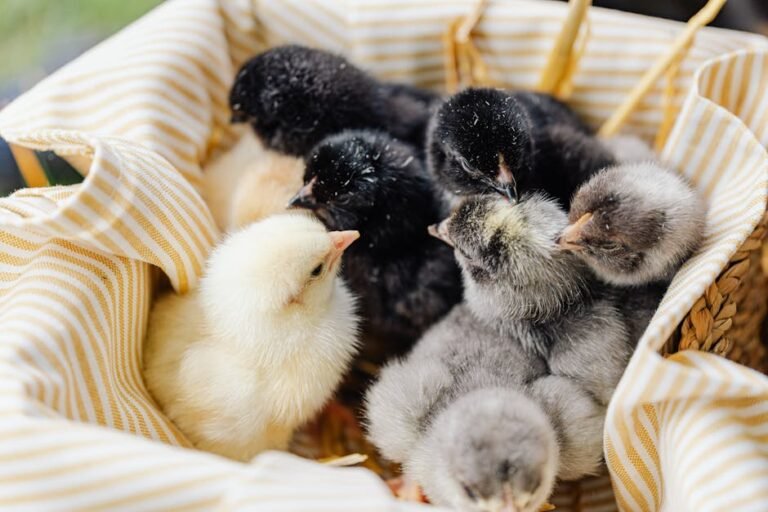
Day-old chicks of most breeds look the same. Three methods work at hatch:
- Color sex-links: in red or gold sex-links (Red Star, Golden Comet, Cinnamon Queen) males hatch white or pale yellow and females hatch red or buff. In black sex-links both hatch black, but males have a white spot on the head.
- Feather sexing: in specially bred crosses, females are fast-feathering: their short covert feathers on the wing are clearly shorter than the flight feathers. In males the two rows are about the same length. This only works for crosses bred for it.
- Vent sexing: hatcheries use trained sexers. It takes a great deal of training and practice, so it isn’t a backyard method.
Hatchery sexing is not perfect, so a “pullet” can still turn out to be a cockerel.
4 to 8 Weeks: Combs and Wattles
Cockerels’ combs and wattles grow and turn red sooner than pullets’. Pullets’ combs stay small and pale-pink until they get close to laying. Compare birds of the same breed and age: pullets of breeds with big combs, such as Leghorns and Minorcas, also grow large combs early. Cockerels are often bigger with thicker legs, but that varies between breeds.
8 to 16 Weeks: Hackle, Saddle and Tail Feathers
This is the most reliable stage for backyard keepers:
- Hackle (neck) feathers: long, pointed and shiny on cockerels; short and rounded on pullets.
- Saddle feathers on the lower back, in front of the tail: long and pointed on cockerels.
- Sickle feathers: long, curved tail feathers that only males grow.
Hen-feathered breeds such as Sebrights and Campines are the exception: the males have rounded, hen-like feathers.
4 to 6 Months: Crowing and Laying
Most cockerels start trying to crow by 4 to 6 months, and some much earlier. Hens crow only rarely. Most pullets start laying between 18 and 24 weeks, depending on the breed and time of year.
Tests That Don’t Work
The shape of the egg does not predict the sex of the chick, and folk tests such as a swinging pendulum or ring are right about half the time, the same as a coin toss.
Free tools
- Chick Temperature & Feed Chart: brooder temperature and feed for each week