This article contains affiliate links. As an Amazon Associate, Grow Chicken earns from qualifying purchases, at no extra cost to you. Learn more.
Health note: This guide is general information, not veterinary advice, and our writers are not veterinarians. If a bird is sick, injured or not improving, contact a poultry vet, and always follow product labels and your vet's instructions for any medication. How we write health content.
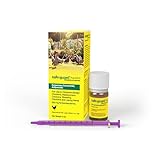
Deworm chickens when a fecal test or clear signs show they need it, not on a calendar. In the US, the only dewormer approved for laying hens that you can buy over the counter is fenbendazole (Safe-Guard AquaSol). It is given in the drinking water for 5 days, and its label requires no egg withdrawal. Other dewormers are either not allowed in hens laying eggs for people to eat, or need a vet’s prescription.
Key Takeaways
- Scheduled “just in case” deworming is not recommended, because it helps worms become resistant.
- Safe-Guard AquaSol (fenbendazole): 1 mg/kg body weight a day in drinking water for 5 days; no egg or meat withdrawal when used as labeled.
- Piperazine (Wazine) removes only large roundworms and must not be used in hens producing eggs for people to eat.
- Ivermectin, levamisole and albendazole are not approved for chickens in the US and need a vet’s prescription.
- Garlic and pumpkin seeds did not reduce worm numbers in controlled chicken trials.
Correction: an earlier version of this article recommended routine calendar deworming and drug rotation, presented ivermectin and levamisole as standard chicken dewormers, did not mention that piperazine is not for laying hens, and called natural remedies “safe and effective”. Those claims have been corrected or removed.
Do Chickens Need Routine Deworming?
No. Alabama Cooperative Extension advises against scheduled deworming because worms become resistant to the drugs. The Merck Veterinary Manual suggests treating birds with heavy infestations that show signs. Chickens that range outdoors will pick up some worms, and a light burden often causes no problems.
How to Tell If Your Chickens Need Deworming
- Get a fecal test from your vet or a state poultry lab. Worm eggs are shed on and off, so one clean sample doesn’t prove there are no worms. Retest if you suspect a problem.
- Watch for signs such as weight loss, poor growth, diarrhea, pale comb, fewer eggs, or gasping and head-shaking (gapeworm).
- Look for worms in droppings. Large roundworms look like strands of spaghetti; tapeworm segments look like small, flat, white pieces.
- Remember that coccidiosis, a common cause of diarrhea and bloody droppings, is caused by protozoa, not worms, and dewormers don’t treat it. See coccidiosis in chickens.
Dewormers for Chickens in the US
| Drug | Status for chickens | Worms | Eggs |
|---|---|---|---|
| Fenbendazole (Safe-Guard AquaSol) | FDA-approved, over the counter, including laying hens | Adult large roundworms; cecal worms in breeding and laying hens | No withdrawal when used as labeled |
| Piperazine (e.g. Wazine) | Approved with restrictions | Large roundworms only | Do not use in chickens producing eggs for human consumption; 14-day slaughter withdrawal |
| Ivermectin | Not approved for chickens; extra-label only, by prescription | Varies | Residues found in egg yolk up to 71 days after the last dose |
| Levamisole, albendazole and others | Extra-label only, by prescription | Varies | Your vet must set an extended withdrawal time |
How to Use Safe-Guard AquaSol
The label dose is 1 mg of fenbendazole per kg of body weight per day, in the drinking water, for 5 days in a row. Make fresh medicated water every day, and follow the label’s mixing directions for the number and weight of your birds. It treats adult large roundworms (Ascaridia galli) and, in breeding and laying hens, cecal worms (Heterakis gallinarum).
Why a Vet Matters for Other Drugs
Under federal rules, using a drug in a way its label doesn’t cover (“extra-label”) in a food animal requires a licensed veterinarian with a valid vet-client-patient relationship, and a substantially extended withdrawal period. That applies to ivermectin, levamisole and albendazole in chickens. Your vet can also identify worms such as tapeworms and gapeworms that fenbendazole’s label doesn’t cover.
Do Natural Dewormers Work?
- Garlic: in a controlled trial, a high-allicin garlic product did not reduce large roundworm counts in chickens, while a conventional dewormer cleared them.
- Pumpkin seeds: in a trial in infected laying hens, pumpkin seed (along with lemongrass oil and ripleaf) had no effect on worm burden or fecal egg counts.
- Diatomaceous earth: the Merck Veterinary Manual reports that food-grade DE fed continuously at 2% of the diet lowered cecal worm and Capillaria numbers. Sprinkling DE around the coop is not the same thing.
- Herbs and essential oils: results have been inconsistent.
Preventing Worms
- Keep litter dry and clean; better sanitation lowers parasite levels in confined flocks.
- Move outdoor runs or rest ranging areas when you can, so worm eggs don’t build up in one patch.
- Tapeworms need an intermediate host such as insects, earthworms, slugs or snails, so heavy exposure to these increases the risk.
- Cecal worms can carry the parasite that causes blackhead, which is especially dangerous to turkeys. Keep that in mind if you keep turkeys with chickens.
FAQs
How often should I deworm my chickens?
Only when a fecal test or clear signs show they need it. Scheduled deworming is not recommended because it helps worms become resistant.
Can I eat eggs after deworming?
With Safe-Guard AquaSol used as labeled, yes: its label requires no egg withdrawal. With piperazine, the eggs must not be eaten. With ivermectin or other extra-label drugs, follow your vet’s withdrawal time.
What is the best dewormer for laying hens?
In the US, fenbendazole sold as Safe-Guard AquaSol is approved for laying hens and requires no egg withdrawal when used as labeled.
Do chickens need deworming if they free-range?
Free-ranging birds are more exposed to worms, but they still only need treatment when testing or signs show a problem.
Conclusion
Test before you treat, use an approved dewormer when one fits (fenbendazole for roundworms and cecal worms), involve a vet for anything else, and focus on dry, clean housing to keep worm numbers down.
Sources
- Merck Veterinary Manual: Overview of Helminthiasis in Poultry
- Safe-Guard AquaSol (fenbendazole) label, DailyMed / US National Library of Medicine
- Alabama Cooperative Extension System: Backyard Poultry Worm Control
- Federal Register (April 29, 1999): piperazine conditions of use
- FDA: The Ins and Outs of Extra-Label Drug Use in Animals
- Frontiers in Veterinary Science (2025): ivermectin residues in eggs after topical use in chickens
- Poultry Science (Velkers et al., 2011): Efficacy of allicin from garlic against Ascaridia galli in chickens
- Pumpkin seed, lemongrass oil and ripleaf against Ascaridia galli in laying hens (PMC)
Checked September 2026. Labels change, so always read the label on the product you buy. See our editorial policy for how we research health articles.