Health note: This guide is general information, not veterinary advice, and our writers are not veterinarians. If a bird is sick, injured or not improving, contact a poultry vet, and always follow product labels and your vet's instructions for any medication. How we write health content.
Favus, also called avian ringworm or “white comb,” is a fungal skin infection of chickens caused by Microsporum gallinae, and when it stays on the comb it usually clears up on its own over several months. It becomes serious only if it spreads to the feathered skin. Because the fungus can occasionally infect people, it is worth handling affected birds with care. This guide covers the signs, the risks and what treatment involves.
Key Takeaways
- Favus is caused by the fungus Microsporum gallinae.
- It shows up as small white, chalky deposits on the comb that can merge into a dull white, moldy-looking layer.
- Favus limited to the comb is self-limiting and heals after several months.
- If feathered skin is involved, the bird can become emaciated and die.
- Microsporum gallinae is a rare cause of ringworm in people, so wear gloves and wash your hands.
Correction: an earlier version of this article named the wrong fungus, described lesions on the neck and vent instead of the comb, overstated how contagious and deadly favus is, omitted the risk to people, and recommended unproven remedies such as diatomaceous earth, apple cider vinegar, essential oils, neem and garlic.
What favus is
Favus is a dermatophyte (ringworm) infection of the skin. The Merck Veterinary Manual names the cause as the fungus Microsporum gallinae. It is sometimes called avian ringworm or “white comb” because of where and how it appears.
Older articles sometimes use other names for the fungus. The name used by current veterinary references is Microsporum gallinae.
Signs to look for
Favus starts on the comb, not on the body. Typical signs include:
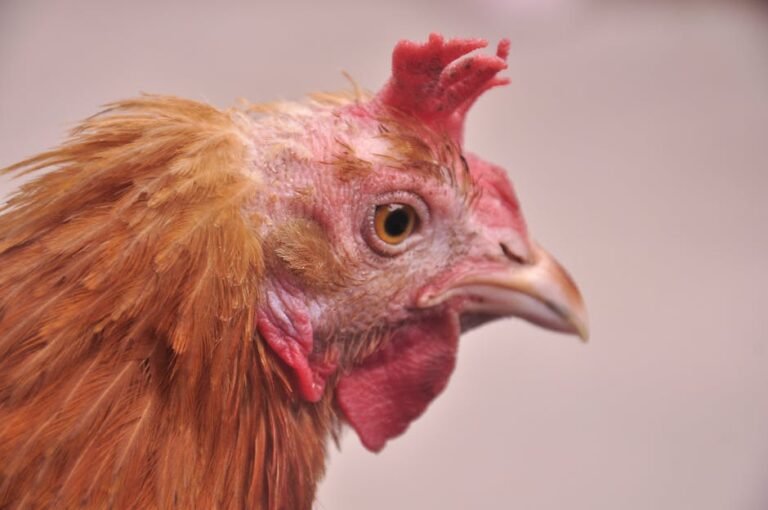
- Small, white, chalky deposits on the comb
- Patches that enlarge and merge into a dull white, moldy-looking layer
- Thickened, crusty skin under the white plaques
- Less often, similar lesions on the skin around the head
White, chalky plaques help tell favus apart from other comb problems. Dark scabs on the comb are more typical of the dry form of fowlpox, and blackened comb tips after freezing weather point to frostbite. Our guide to black spots on a chicken comb covers those causes, and our chicken comb guide shows what a healthy comb looks like.
How serious is favus?
In most birds, favus is a cosmetic problem. Merck describes it as self-limiting: the comb heals after several months, and disease limited to the comb does not affect the bird’s health.
The exception is when the infection spreads to the feathered skin. In that case the bird can become emaciated and die. A bird with lesions spreading beyond the comb and head, weight loss or feather damage should be seen by a veterinarian.
| Where the lesions are | What to expect |
|---|---|
| Comb only | Heals on its own after several months; bird’s health not affected |
| Comb and skin around the head | Monitor closely; ask a veterinarian |
| Feathered skin | Serious; bird can become emaciated and die; see a veterinarian |
Can people catch favus?
Yes, though it is uncommon. Merck lists favus as a public health concern because Microsporum gallinae is a rare cause of ringworm (dermatophytosis) in humans.
- Wear disposable gloves when handling a bird with comb lesions.
- Wash your hands well afterward, and keep children from handling affected birds.
- See your own doctor if you develop an itchy, ring-shaped or scaly skin patch after handling chickens.
Treatment and medications
Because comb-only favus heals by itself, many birds need no drug treatment. Have a veterinarian confirm the diagnosis first, since other conditions can change how a comb looks.
If a veterinarian recommends an antifungal, remember that chickens are food animals. Using a drug outside its label in a laying hen is only allowed on a veterinarian’s order, and it comes with a withdrawal period during which eggs must be discarded. Ask how long that is before you collect eggs to eat. Merck also notes that all medications given in drinking water now require a prescription.
There is no good evidence that diatomaceous earth, apple cider vinegar, essential oils such as tea tree or oregano, neem or garlic treat or prevent favus. Putting unlabeled products on a laying hen can also leave residues in eggs, so skip them.
Practical steps for your flock
- Separate an affected bird while a veterinarian confirms what is going on.
- Check the combs and heads of the rest of the flock.
- Handle affected birds last, with gloves, and wash your hands afterward.
- Clean feeders, waterers and perches the bird has used.
- Watch for lesions spreading to feathered skin or for weight loss, and call your veterinarian if you see either.
General biosecurity for chickens, such as quarantining new birds before they join the flock, helps keep many infections out.
FAQs
What does favus look like on a chicken?
Small white, chalky spots on the comb that can grow and merge into a dull white, moldy-looking layer over thickened skin.
Will favus go away on its own?
When it is limited to the comb, yes. Merck describes it as self-limiting, with the comb healing after several months.
Can I get ringworm from my chickens?
It is possible but rare. Microsporum gallinae is a rare cause of ringworm in people, so wear gloves and wash your hands after handling affected birds.
Can I eat eggs from a hen with favus?
Favus itself is a skin infection of the comb. If your hen is given any medication, follow the egg withdrawal time your veterinarian gives you.
Do natural remedies cure favus?
There is no good evidence that remedies like apple cider vinegar, essential oils, garlic or diatomaceous earth treat favus.
Conclusion
Favus causes white, chalky patches on the comb and usually heals by itself over several months without harming the bird. Watch for spread to feathered skin, which is serious, and protect yourself with gloves and handwashing because the fungus can rarely infect people. Talk to a veterinarian before using any medication on a laying hen.
Sources
- Merck Veterinary Manual: Common Infectious Diseases in Backyard Poultry
- Merck Veterinary Manual: Favus infection, comb, chicken (image)
- FDA: The Ins and Outs of Extra-Label Drug Use in Animals
- Merck Veterinary Manual: Fowlpox in Chickens and Turkeys
- Poultry Extension (extension.org): Frostbite in Chickens
Checked September 2026. Labels change, so always read the label on the product you buy. See our editorial policy for how we research health articles.